
A guide from the bench
How much does dent repair cost?
The honest answer is that four things decide it, and all four have to be seen. Here is what they are, so you can look at your own car and know roughly where you stand before anyone quotes you.
The four things that set the price
There is no flat rate for a dent, and there cannot be one. Two dents the same width can differ several times over in price, and it is never arbitrary — it is these four, every time.
 1. How big it is
Depth matters more than width. A wide, shallow dish comes out faster than a small, deep one that has pushed the metal further out of shape.
 2. Where it sits
The open middle of a panel is the cheap spot. A bodyline, a panel edge, or the crown of a curve is stiffer metal and slower, more careful work.
 3. What is behind it
The repair happens from the back. Open access is quick. A brace, a foam block, a wiring loom or a sealed cavity means removing trim to reach it — or reaching it a much harder way.
 4. How many there are
Additional dents on the same panel cost far less each, because the expensive part — getting to the back of that panel — is already done.
Which is why nobody can price your dent on the phone. Not one of those four can be heard. A firm number given down a phone line is either a guess that will move when the technician sees the car, or a low hook to get someone into your driveway. Photographs answer all four in about thirty seconds — take one straight on and one at a low angle with light reflecting across the panel, and a real number can come back the same day.
Where your dent probably sits
These are real repairs, ordered from least expensive to most. Find the one that looks like yours and you will know which end of the range you are at.
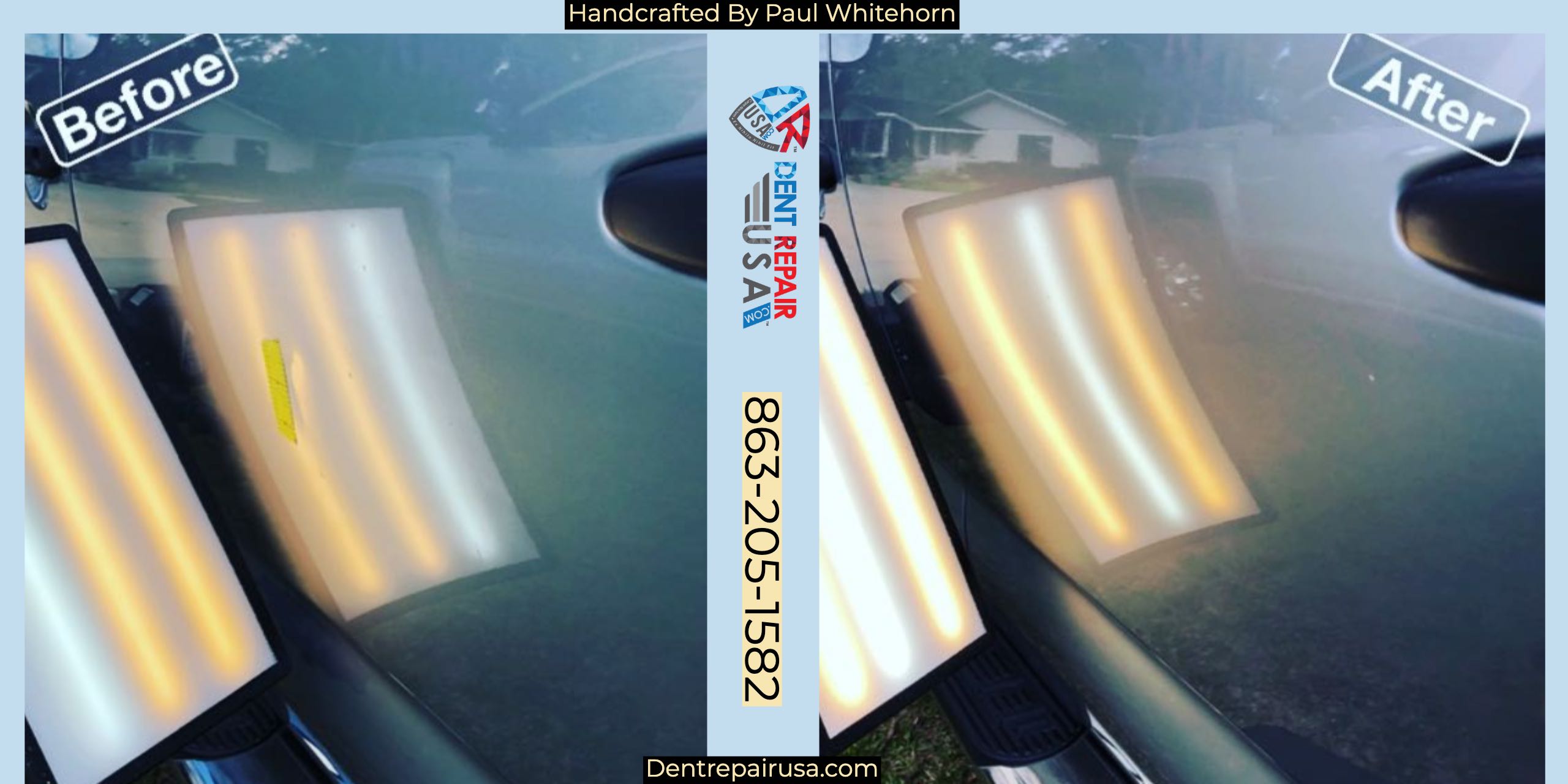
The parking-lot door ding
Small, round, in the open middle of a door, paint unbroken. This is the benchmark every other repair is priced against — quick to reach, quick to work, and usually done while you wait.
If you have three of these across the car, ask for all three together. The second and third are much cheaper than the first.
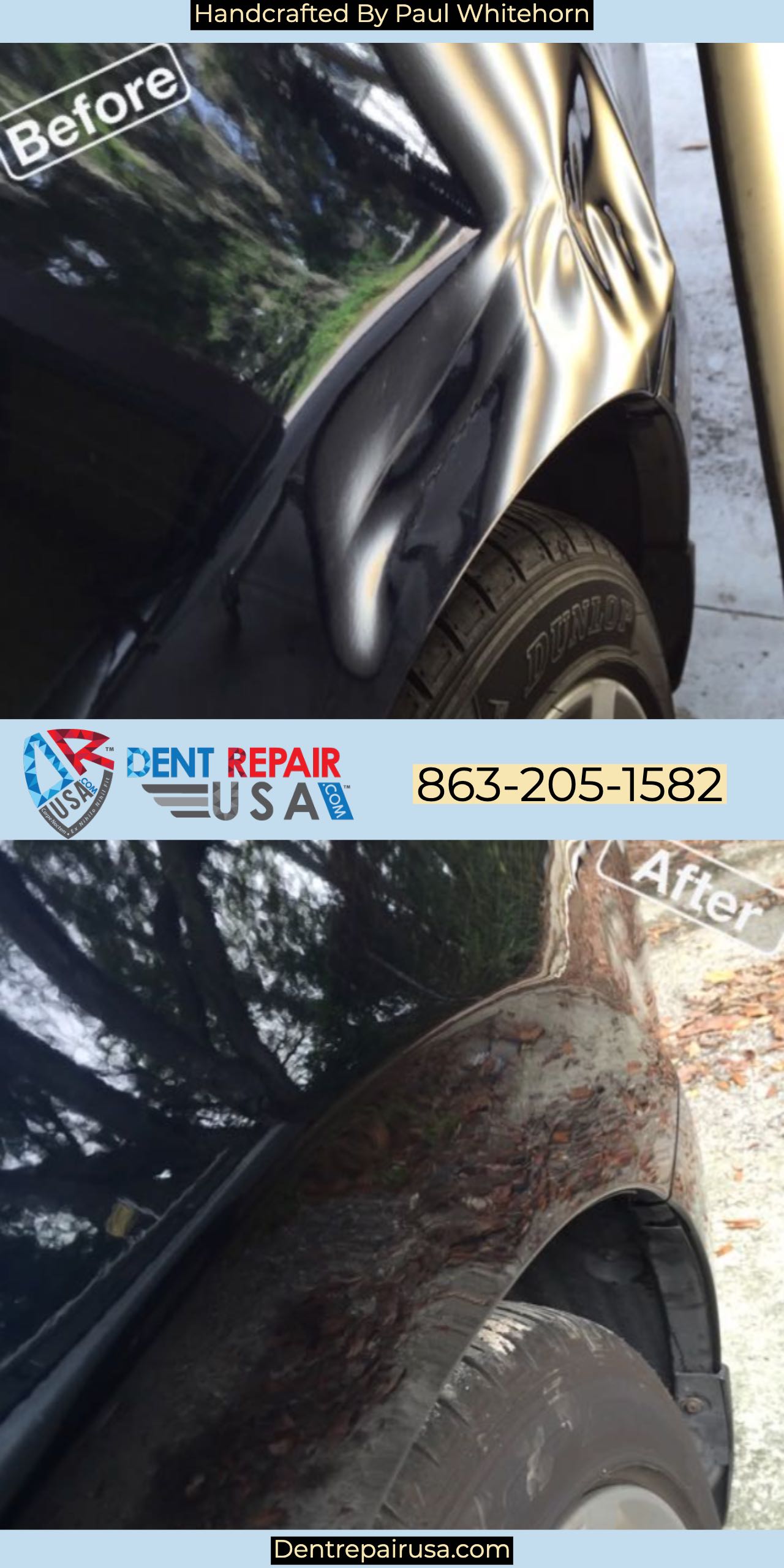
A crease, or a dent on a bodyline
A crease is stretched metal, and stretched metal does not come back in one push — it comes back in stages, working along the length of it. A dent sitting on a bodyline is the same problem, because that fold is the stiffest metal on the panel.
Same width as a door ding, several times the work. This is the most common place people are surprised by a price, and it is worth understanding rather than arguing about.
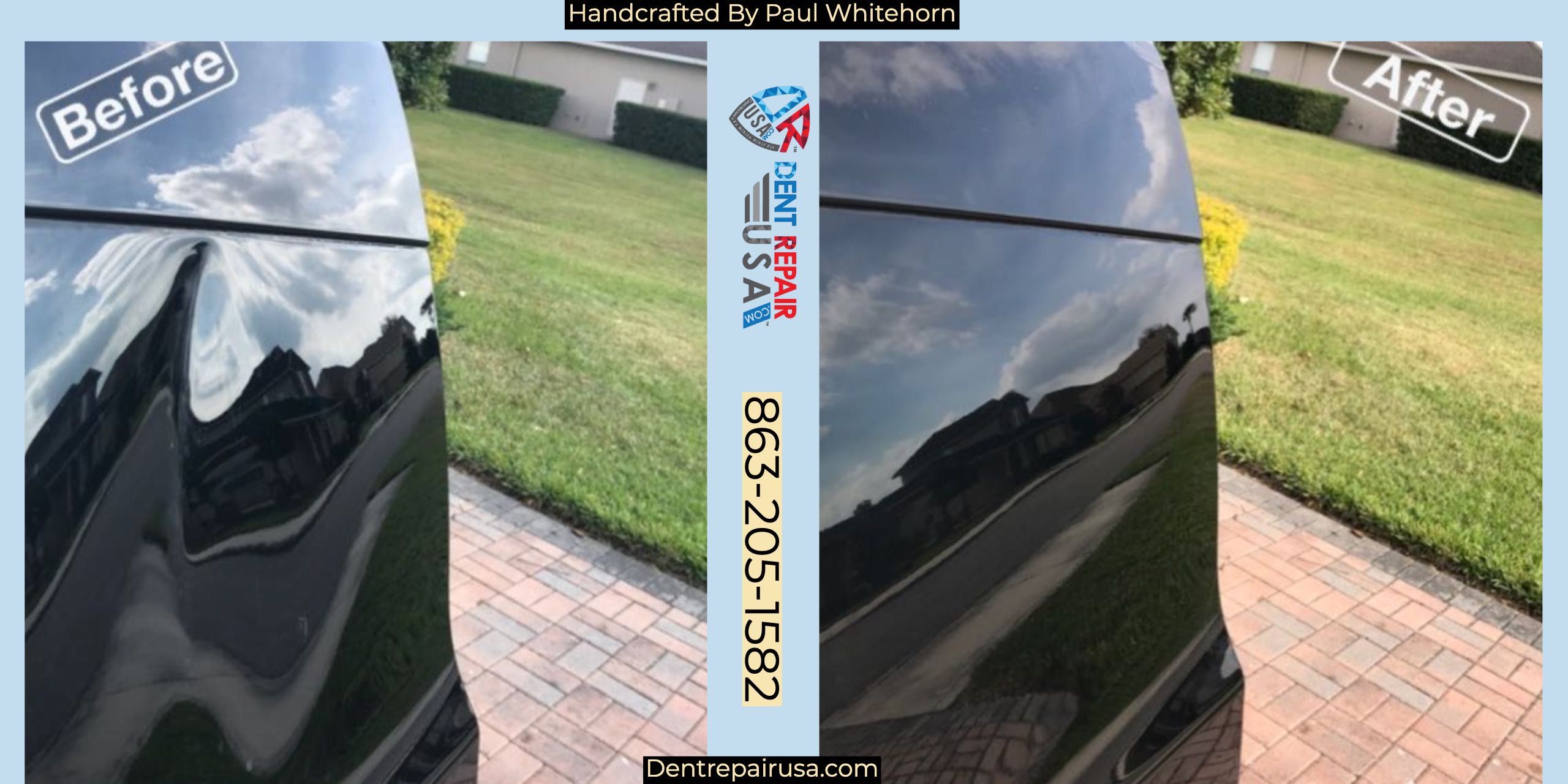
A large dent with awkward access
Big is not automatically expensive — a large, shallow dent on an open panel can be straightforward. What adds cost is the panel it landed on. Decklids, roofs and quarter panels often mean removing trim, headliners or interior panels just to reach the back of the metal.
Ask specifically whether trim removal is in the price. It should be, and it should be said out loud.
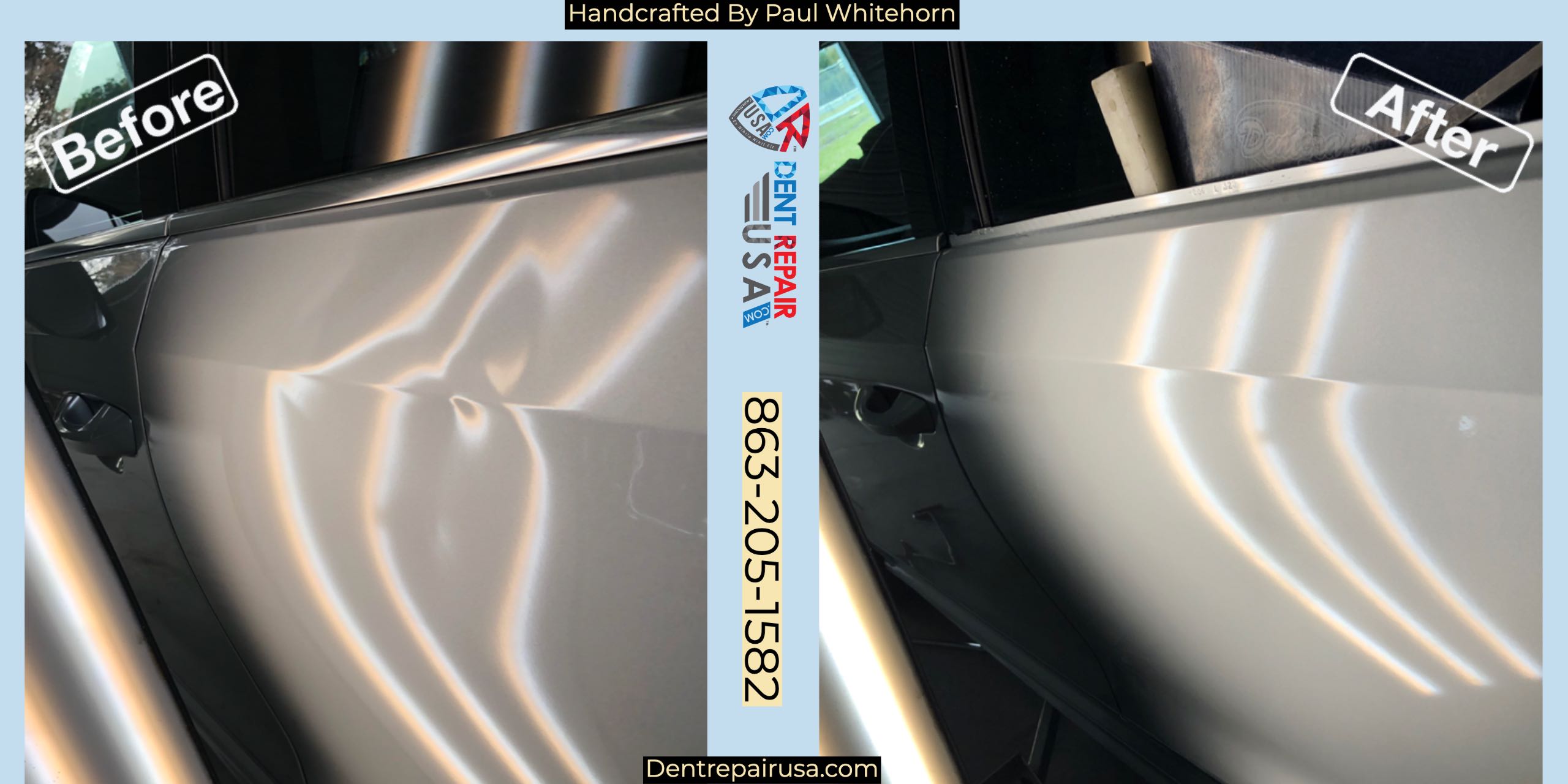
Aluminium, or a sealed panel
Aluminium has no memory the way steel does. It will not spring back on its own, it work-hardens as you move it, and it usually needs heat and a much slower hand. Many technicians will not touch it. The panels that are glued or sealed shut are the same story for a different reason — the back of the metal is simply not reachable without significant disassembly.
These are still frequently worth doing, because the body shop alternative on an aluminium panel is not cheap either.
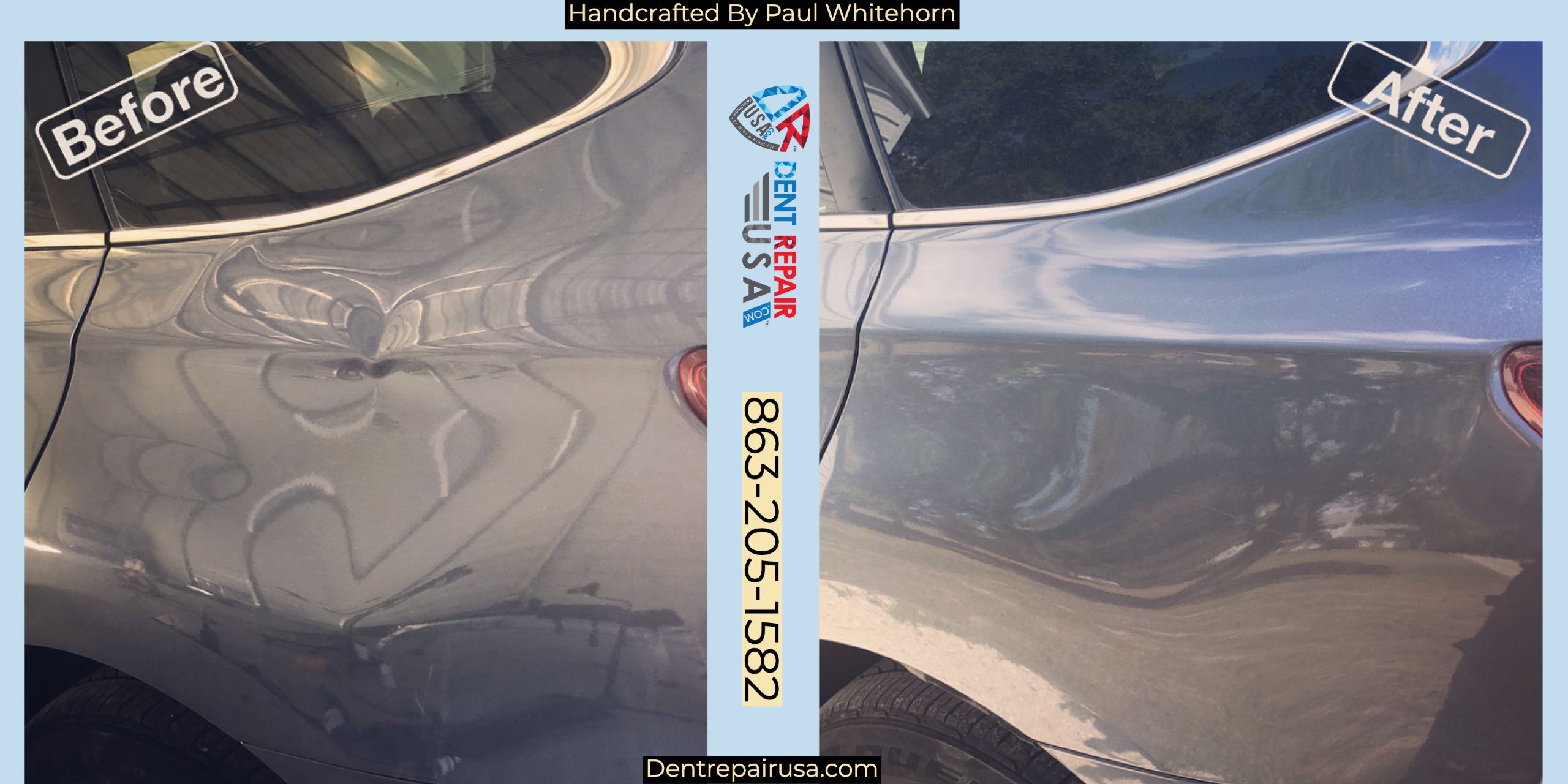
Extreme damage that is still paintless
Damage this severe can often still be done without paint, and when it can, it beats a body shop on both cost and on what it leaves behind — the original finish. But it is hours of work, and it is the category where an honest technician is most likely to tell you the answer is a body shop instead.
If someone looks at damage like this and promises perfection without hesitating, be more careful, not less.
Paintless versus a body shop
When the damage qualifies, paintless repair is substantially cheaper — and the reason is simply that it skips most of the job. A body shop repair means filling, sanding, priming, painting, then blending the new paint into the neighbouring panels so the colour matches, plus the days of shop time all of that takes. Paintless reshapes the metal that is already there. No filler, no paint, no blending, usually hours rather than days.
The qualifying condition is the paint. Paintless repair works while the finish is unbroken. Once the paint is cracked, chipped or scraped down to primer, no amount of metalwork fixes it, and the body shop is genuinely the right answer — not an upsell. A technician who tells you that is doing you the favour, because he has just talked himself out of the job.
There is a second, quieter saving. Filler and fresh paint show up on a resale inspection and can land in the car's history. The factory finish never being disturbed is worth real money later, which is why lease returns and trade-ins are two of the most common reasons people finally get a ding fixed.
Should you claim it on insurance?
For a single dent, usually not — and this is the part where getting the estimate first genuinely saves you money. Most single-dent repairs come in below a typical deductible. Filing in that case pays you nothing and still puts a claim on your record.
The order that works: get a written number first, then compare it to your deductible, then decide. Well above it, claim. Near or below it, pay outright and keep the claim. Any technician should hand you that number without a claim attached to it — and if the damage is hail rather than a single ding, the arithmetic changes completely, which is covered in the hail claim guide.
How to get a number you can trust
- Send photographs, not descriptions. One straight on, one at a low angle with light reflecting across the panel so the shape of the dent shows.
- Mention every dent, not just the one that bothers you. Grouping them is cheaper, and finding the others later is how estimates change.
- Say whether the paint is broken. Run a fingernail across it — if it catches, say so. It decides the whole answer.
- Ask for it in writing. Verbal numbers move. Written ones do not.
- Ask what happens if it does not come out perfect. The answer tells you whether you are buying a repair or a gamble.
The longer version of that last point — how to judge the person, not just the price — is here: how to choose a paintless dent repair technician.
Common questions
How much does it cost to fix a door ding?
A single door ding in the open middle of a panel, with the paint unbroken, is the least expensive repair in this trade — it is the benchmark everything else is priced against. What moves it up is size, a position on a bodyline or panel edge, bracing or foam behind the panel, or a second and third dent. Any technician should give you a firm written number from clear photographs, free and without commitment.
Why won't anyone quote over the phone?
Because the four things that set the price cannot be heard. Size, exactly where on the panel it sits, what is behind that spot, and how many there are all have to be seen. A phone number is either a guess that will change on arrival, or a low hook to get into your driveway. Send photographs — a good photo answers all four in about thirty seconds.
Is paintless cheaper than a body shop?
Substantially, when the damage qualifies. A body shop repair means filling, sanding, priming, painting and blending into surrounding panels, plus days of shop time. Paintless reshapes the original metal from behind — no filler, no paint, no blending, usually hours instead of days. It only works while the paint is unbroken; once it is cracked or scraped to primer, the body shop is the correct answer.
Why does one dent cost more than another the same size?
Access and shape. A dent in the open middle of a door can be reached from behind and worked in minutes. The same dent on a bodyline, a panel edge, or over a brace, foam block, wiring loom or sealed cavity can take hours. Sharp creases also cost more than round dents, because stretched metal has to be brought back in stages rather than pushed out once.
Do multiple dents cost more each?
Less each, not more. Most of the cost of a single dent is setup — reaching the back of the panel, removing trim, setting the lights. Once a technician is inside a panel, additional dents on it are far cheaper than the first. One dent on four panels costs more than four dents on one panel, which is why it is worth mentioning all of them.
Should I claim it on insurance?
Get the written estimate first. Most single-dent repairs come in below a typical deductible, which means a claim would pay you nothing and still be a claim on your record. Well above your deductible, claiming makes sense. Near or below, pay outright. You should be able to get that number without a claim attached.
Can a dent be too small to fix?
Too small is rarely the problem — small shallow dings are among the most satisfying repairs. The honest limit is at the other end: metal stretched by a sharp impact, a crease running through a bodyline, or paint that has already cracked. A technician who tells you it is not worth doing, or not his job at all, is giving you the most valuable answer available.
Does it hurt my resale value?
Repairing it properly protects the value; leaving it does not. Filler and fresh paint show on a resale inspection and can appear in the vehicle history. Paintless repair leaves the factory finish untouched — exactly what a buyer, a lease-return inspector or an appraiser wants. Lease-return dent charges are frequently more than the repair would have cost.
Get an actual number for your car
Paul Whitehorn — Vale Certified Master Craftsman II, ARC certified, paintless dent repair since 1999 and past 14,000 vehicles, repairs guaranteed to $1,000,000 per panel, working from a fixed shop at 1410 Walt Williams Rd in Lakeland.
Send photographs and you will get a written price — including, when it applies, the sentence that this one belongs at a body shop instead.
 Call 863-205-1582