
Chapter Three
The Road Signs
Paintless dent repair has a peculiar habit of looking simple from a distance. A man stands beside a car with a rod in his hand. He pushes here, taps there, moves a light, and presently the dent is gone. The young technician watches this and thinks: I understand what he is doing. He does not. I know he does not, because I was once that young technician, thinking exactly that, on a day I can still name. The strange thing about this trade is that it only becomes simple after you discover how complicated it really is. At first you believe the mystery lives in the hand. Later you are certain it lives in the tool. Eventually, if you stay with it long enough, you find that most of the mystery was living in the mind the whole time, paying no rent.
What follows is an account of three things: why that mystery has proved so hard to hand from one man to another, what fear does to a technician standing in front of damage he cannot read, and what the money in this trade actually looks like once the stories are set aside.
3.1Learning on dirt roads
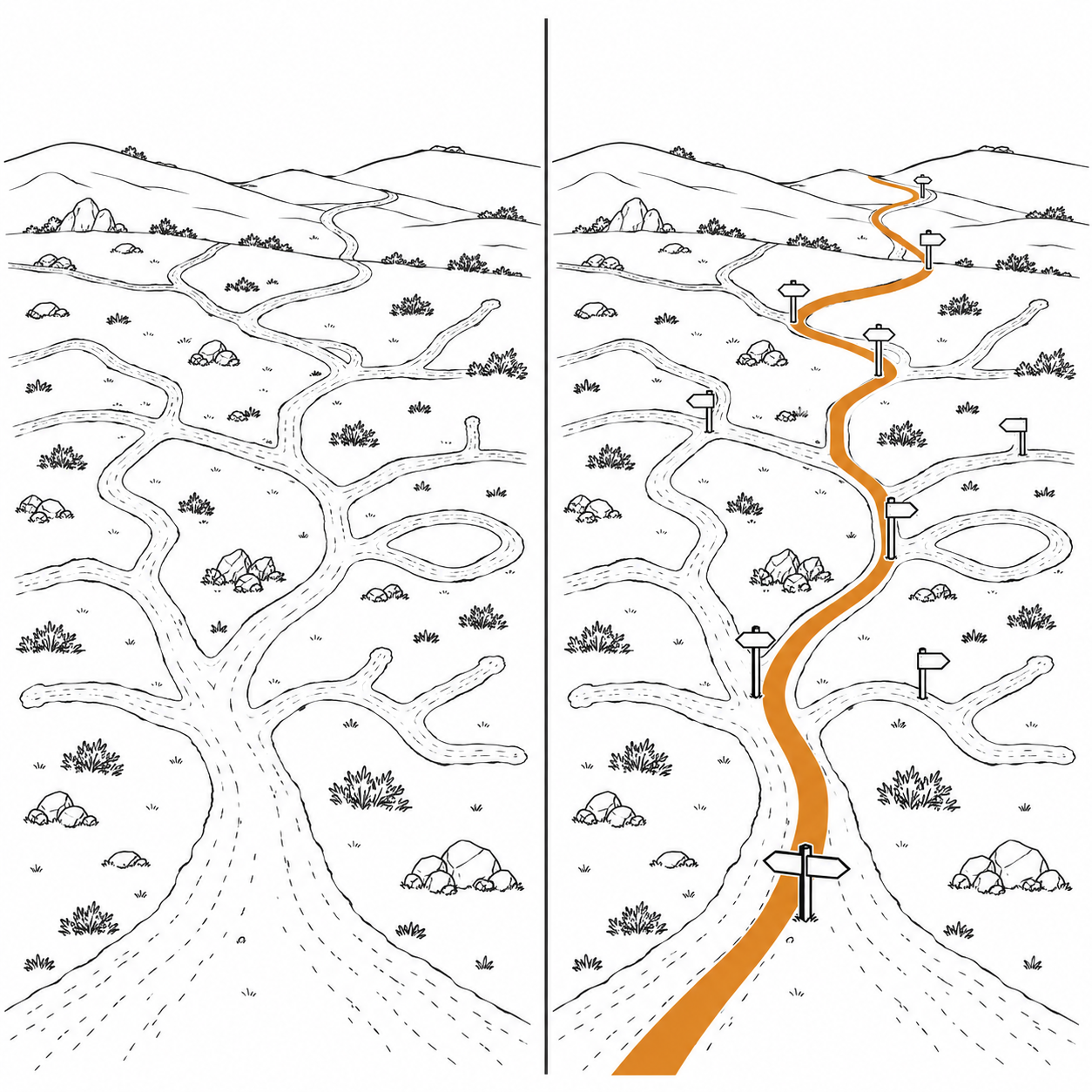
For most of the history of this craft we have learned on dirt roads. One technician learns from another. A second learns from a corporation. A third teaches himself in a garage with a borrowed rod and a ruined hood. Each invents a few words, borrows a few more, and grows a private way of seeing metal. Then we wonder aloud why two excellent technicians can stand over the same panel and sound as though they practise two different trades. There is nothing wrong with learning by hand. There is no substitute for it. You will not become a technician by reading this book, any more than you will become a boxer by reading about footwork. The boxer who understands why his feet matter learns faster than the man who merely copies the champion. The same holds here. This book is my attempt to put up road signs.
You will not become a technician by reading this book, any more than you will become a boxer by reading about footwork.
I have spent many years pushing dents, and a good deal more time than I care to confess repairing things I ought never to have done to them in the first place. Some of what I know came from good teachers. Much more came from broken clips, ruined afternoons, aching hands, lost money, frightened customers, and those miserable repairs that seemed to grow worse every time I touched them. You should learn from those things too. I only hope you will not have to buy the whole set yourself. A book of this kind is not a replacement for apprenticeship. It is a companion to it: learn the ideas, learn the language, then stand beside a qualified technician and put your hands on metal.
Notice that I said a qualified technician, not merely an old one. Time and competence are not the same thing, and this trade confuses them constantly. Twenty years of repeating a poor pattern does not turn that pattern into wisdom. It turns it into habit. Even twenty years of excellent work will not make a man a good teacher if he cannot say what his hands are doing. There are men in this trade who perform astonishing repairs and cannot explain a single decision they made. Their hands have learned what their mouths have forgotten. That does not make them frauds. It makes them craftsmen whose knowledge has gone down into instinct. The danger begins only when instinct is sold as mystery.
3.2There is no magic
For there is no magic in paintless dent repair. When a technician tells you you just have to feel it, he may be reporting his own experience accurately enough, but he has told you almost nothing. Feel is compressed knowledge: some thousands of remembered reactions travelling through the mind so quickly that the man no longer notices the calculation. Slow those reactions down. Name them. Set them side by side. Teach them. What looked like magic becomes method. Supplying that vocabulary is one purpose of this book. The other is to warn you about easy answers. Every trade has its snake oil, and ours arrives dressed as secret tools, secret pushes, secret glue, secret lights, and secret systems known only to the man selling the seminar. Be cautious whenever a man tells you he holds the one hidden truth that explains everything. If he genuinely understands his method, he can describe it plainly enough for you to test it. A real principle survives explanation.
The young technician is especially vulnerable here, and for a reason that does him no discredit: he is desperate for certainty. I remember that desperation precisely. There is a dent in front of you. You have already made it worse. Suddenly you would pay almost anything to have another man tell you exactly what to do next. That is why this trade produces so many gurus. Fear makes a wonderful market for certainty.
3.3The red door
My own first great lesson in fear arrived on a red door. There was a crease beneath the handle. I had been working it perhaps thirty minutes and was not merely failing to improve it: I was actively making it worse, with commitment. An experienced technician wandered over, looked at what I had done, laughed, and walked away without a word. It shamed me, and then it made me angry. At that age I took the anger to be about him. It was not. I was angry because I had just met the possibility that the dent might beat me. So I decided I would either repair it or remain there for ever. I did repair it, eventually. I also broke the door handle, and the replacement part cost more than the job was worth. The customer was delighted. My wallet was not.
Fear makes a wonderful market for certainty.
Years afterwards I understood that the lesson was not that anger makes a good technician. The lesson was that fear must be crossed. Every technician arrives sooner or later at a repair where his confidence simply departs: the dent looks too large, too sharp, too stretched, too locked, or merely too strange. That moment does not mean you are finished. It means you have reached the edge of what you already know. Never confuse the edge of your knowledge with the edge of what is possible. There are times when the right answer is to stop. Not every dent should be repaired. Not every vehicle should be touched. A good technician must know when paint, or access, or stretching, or plain economics has made the work unreasonable. But let that judgement come out of knowledge, not out of panic. When the fear arrives: slow down. Read the panel again. Find the origin. Check the crown. Change your angle. Change your leverage. Ask what the metal is telling you. If you still do not know, go and watch a man who does. This trade rewards endurance far more than bravado.
3.4The money
There is one more truth we ought to settle early, and it concerns money. A great many people enter this work because they have heard the stories: freedom, high income, easy days. There is truth in those stories. There is also a great deal left out of them. You can earn an honest living here, build a good business, and make a remarkable amount of freedom for yourself. You can also work yourself into the ground, destroy your shoulders, ruin your knees, exhaust your eyes, misprice half a season, lose your accounts, and discover that owning a business means the telephone now owns a portion of your nervous system. The repair is only one part of the life. Work for another man and you trade a share of the income for stability, for leads, for systems, for less risk. Work for yourself and you keep more of the upside and inherit nearly all of the uncertainty. Neither road is automatically noble. Neither is automatically foolish. But you ought to know what you are buying. I have often said that repairing dents is a very small part of owning a dent repair company. The rest is selling, scheduling, tools, customer expectations, accounting, risk, reputation, and the quiet low worry that tomorrow the phone may not ring at all.
Do not become so enchanted by the money that you forget the craft. Money will tempt you to hurry the last ten per cent, to accept standards you would once have refused, to call a repair finished because the customer is already pleased. That is how quality decays: rarely in one dramatic collapse, almost always by one small compromise at a time. So mind the small things. Clean your tools. Protect the car. Take the trim off properly. Put the clips back where they belong. Keep your word. Arrive when you said you would arrive. The customer notices a great deal more than you suppose, and the habits that govern small things will in the end govern large ones. A certain cockiness grows naturally in dent technicians, and some of it is useful. You need confidence enough to put a tool behind an expensive panel and believe you can improve it. But confidence is not the same thing as pretending you cannot be wrong. You will be wrong, and frequently. The question that matters is whether being wrong makes you curious or defensive. Curiosity builds technicians. Defensiveness builds legends inside their own heads.
3.5The ground this book stands on
So here is the ground this book means to stand on. The apparent simplicity of the trade is precisely what makes it dangerous to learn: a craft that looks obvious from outside attracts men who never think to examine it from within. The knowledge exists, but it has been locked up inside individual hands and private vocabularies, and what cannot be described can be neither taught, nor tested, nor improved. Fear will meet you at the boundary of what you know, and it will feel identical to the boundary of what can be done. The two are not remotely the same thing. The money is real, but smaller and harder than the stories promise, and it will quietly buy your standards from you if you permit it. So begin here: seek knowledge, test what you are taught, learn to describe what your hands are doing, and do not be ashamed of the dents that humble you. Those are usually the ones doing the teaching.